
Swiss Chard and
Dino Kale
Nutrient-Dense Greens Built for Heat and Flavor
Cooking Greens and Leafy Vegetables in Lafayette for hearty dishes that depend on strong flavor and consistent texture after cooking
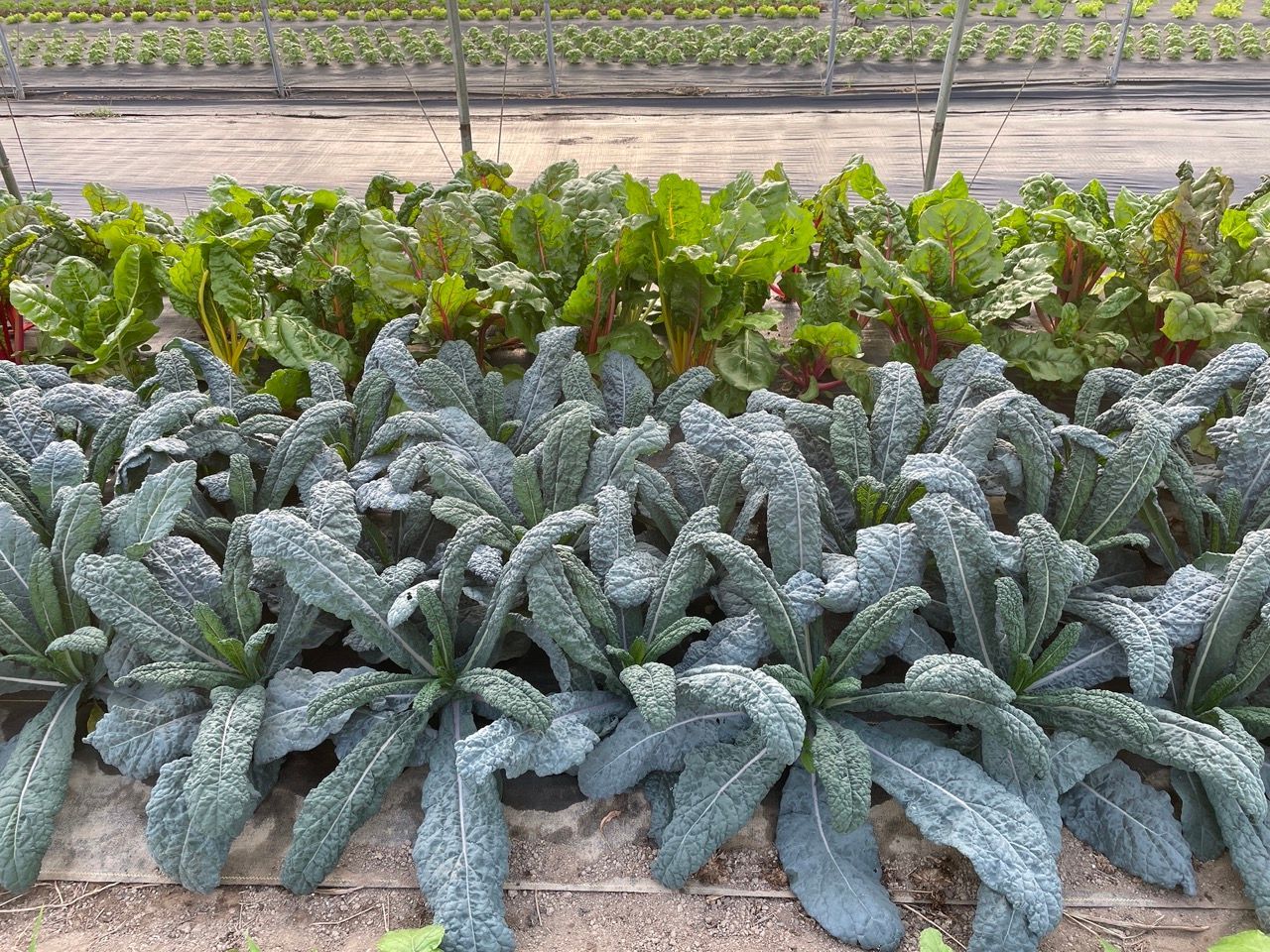
St. Joseph Homestead grows cooking greens like dino kale, Swiss chard, and celery using regenerative practices that improve soil quality and produce plants with high nutritional value and robust flavor. You buy these greens when you need something that holds up to sautéing, braising, or adding to soups, and you notice the leaves stay intact during cooking rather than dissolving into mush. These vegetables are harvested fresh in Lafayette and sold seasonally based on optimal growing conditions, so you get them when the plants are at their best rather than forced out of season with artificial inputs.
Cooking greens require soil rich in organic matter and minerals to develop the dense texture and strong flavor that home cooks and chefs look for. The farm builds soil health over time with compost, cover crops, and minimal tillage, which encourages deep root growth and better nutrient uptake. Dino kale has dark, bumpy leaves that turn tender when cooked and carry a slightly earthy taste that pairs well with garlic and olive oil. Swiss chard offers colorful stems and broad leaves that work in stir-fries and side dishes, and celery adds crunch and aromatic depth to stocks and stews.
If you want greens that contribute real flavor and nutrition to cooked meals, visit our booth at Le Bon Marché.
What Changes After You Start Cooking
with Soil-Grown Greens
You sauté a bunch of dino kale and the leaves wilt down but still have body, with no slimy residue or watery runoff that dilutes your dish. The flavor is pronounced enough to stand alone with just salt and a squeeze of lemon, and the stems soften without becoming stringy. Swiss chard cooks quickly and the colored stems hold their shape, adding visual appeal and a mild sweetness.
After you use these greens regularly, you notice they do not shrink as much during cooking compared to conventionally grown versions, which means you need less volume to feed the same number of people. St. Joseph Homestead focuses on slow growth and nutrient-dense soil, so the plants develop thicker cell walls and higher concentrations of vitamins and minerals that survive the cooking process. The greens also store well in the refrigerator for up to a week when kept in a breathable bag or container, and they do not yellow or decay as quickly as greens grown with synthetic fertilizers.
The farm offers these greens seasonally, so you find dino kale and Swiss chard more reliably in cooler months when they thrive, and celery appears when conditions support its longer growing cycle. What is not included is any washing or trimming beyond what happens at harvest, so you rinse and prep the greens yourself to your own standards.
People who cook with greens often ask how to choose the right variety and how to store them for the best results.
Questions About Selecting and Preparing Cooking Greens
What makes dino kale better for cooking than other kale varieties?
Dino kale has narrower, more textured leaves that hold up under heat without becoming mushy, and the flavor is less bitter than curly kale, making it more versatile in a range of dishes.
How do you store Swiss chard so the stems stay crisp?
You wrap the chard loosely in a damp towel and refrigerate it in the crisper drawer, using it within five to seven days before the stems lose moisture and the leaves wilt.
Why do regenerative practices improve the flavor of cooking greens?
Regenerative practices build soil biology and mineral content, which plants absorb and convert into flavor compounds and nutrients that you taste in the finished dish
When are cooking greens available in Lafayette during the year?
You find the best selection from late fall through early spring when cooler temperatures support slower growth and more concentrated flavors, though some varieties tolerate summer heat with proper care.
How do you prepare celery grown for flavor rather than just texture?
You use the whole plant, including the leaves, which carry strong aromatic oils that add depth to stocks, and you chop the stalks for soups or eat them raw when you want a crisp, fresh bite.
If you want greens that bring real flavor and nutrition to your cooking, shop at Le Bon Marché and choose varieties that fit the dishes you plan to make that week.